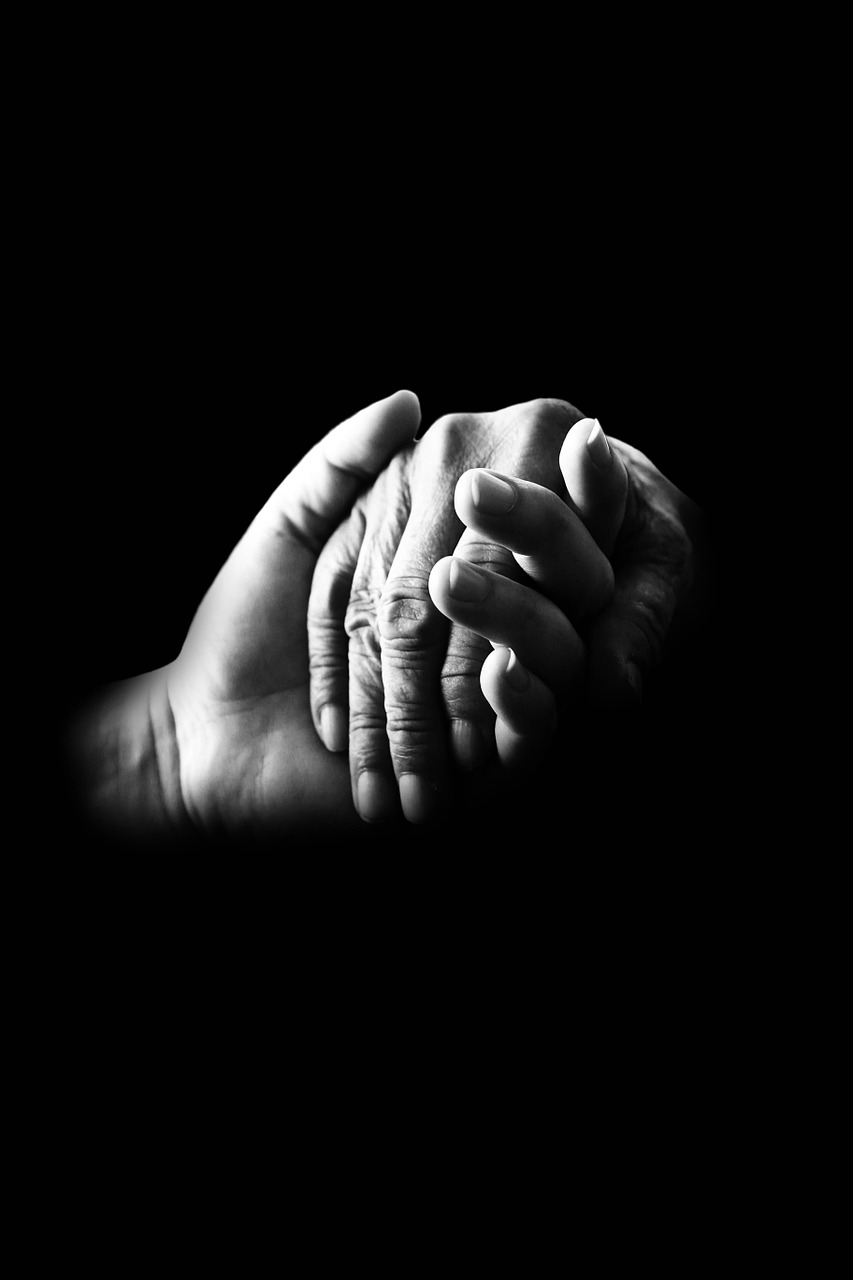
Moving from Punishment to Compassion

Throughout my long journey of healing from depression, I have been learning about the things I need to change within myself. It’s been a challenging, immeasurably rewarding and highly educational experience. It has been a process that has taught me more about myself and about humanity than I could have learned in any other way. I have always been drawn to and moved by Philosophy (the love of wisdom) so this process is feeding a very deep need in me and I’m always wanting to learn more. I know without a doubt that this is where I was meant to be, on this path of learning, and it took depression to ultimately lead me here.

One of the reasons why it’s so challenging to learn about the things that I need to change is that I, like many others, have to contend with an inner (and sometimes outer) kneejerk defensive reaction that wants to protect myself from any kind of accusation of wrong doing. If something needs to change, there needs to be an understanding of what that is and why it needs to change. This is often where the defense mechanism kicks in and this defensive reaction has everything to do with having been immersed in a punishment oriented world for so long – one that breeds this defensiveness in so many of us. The defense is a means of avoiding punishment (a sort of survival instinct). Whether it’s physical, disciplinary punishment (my parents were big softies when it came to this actually) or more of a constant series of responses that indicate how underserving a person is who has ‘done wrong’, it’s a pattern underlying typical social behaviour in our world beginning from early childhood. It is both formal in some instances (reprimands/discipline of children or legal action/jail for adults) and informal in others (social shaming, exclusion and an endless nuanced form of passive aggression). It’s a pervasive pattern that becomes internalized. The continued internal self-punishment and admonishment supports the ongoing external version – that which we apply to others – often in the form of judgement.

On a personal level, when you disparage someone else in your own mind for doing something that is considered to be wrong, you are reinforcing that tendency to punish. This strengthens the punishment reaction so that it becomes alive and well in the mind. Unfortunately, this inner tendency towards punishment is most often directed at yourself because you are the person you live with 24hrs a day. This is really what’s behind the old standing piece of wisdom: ‘When you hurt others, you’re only hurting yourself’. As it turns out, this has merit.

Punishment is a deterrent to personal growth and most importantly to unconditional self-love, which is an imperative for well-being. Because of the anticipation of punishment, defensiveness is justified as ‘self-protection’. This act of self-protection can be mistaken for an act of self-love. It is not. The defense itself is actually based on a false assumption that we can only be loved or be worthy of love if/when we don’t ‘do wrong’ or that if we ‘do wrong things’, we’re not entitled to or deserving of love – even if temporarily. It’s such an old, familiar and damaging paradigm and tearing this down can be extremely liberating. It can be both a beginning and an end: the beginning of compassion and an end to suffering.

It has been a mandatory part of my healing and growth to exercise compassion with myself and with others. Compassion is something that I have learned to nurture within. At times it’s utterly inspired and I am at peace. At others, it takes a supreme effort and I have to remind myself of the wisdom of this approach and of its constant rewards. The rewards of compassion are very clear. If I create an atmosphere in my mind of compassion, I give myself more opportunities to grow and change for the better. In an atmosphere of compassion, I have every incentive to do this because I’m no longer wasting energy defending myself and living in fear of punishment. If I’m treating myself and others with compassion and benefiting from it, I am cultivating an atmosphere of compassion all around me. This is the real revolution. Moving away from punishment and towards compassion is a revolutionary act. In fact, it might be more appropriate to term it an evolutionary act. I believe that we are growing out of this punishment phase of humanity.

Despite popular belief, punishment doesn’t work – not even formally. There have been numerous studies to support this fact and overwhelming evidence. Incarceration and corporal punishment have not reduced crime. In fact crime has only increased steadily and incarceration facilities are growing. Punishment is not effective in bringing about positive change because it only motivates people to avoid punishment rather than to consider for themselves why deep personal change might be necessary and how it might benefit them.

My path of intentional, personal growth began with Shamanism, an ancient practice of healing which for me has involved using many tools & medicines including Ayahuasca and always guided by a higher form of consciousness. There are many ways to access a higher form of consciousness. Some do this through meditation. For me, Shamanism has involved a form of meditation that we call journeying. Whatever name we put on it, this experience can be very liberating. I needed to be liberated from my way of thinking and this liberation has been an instrumental part of my healing. One of the main concepts introduced early in my Shamanic practice was the idea of ‘self service’. If I was to heal and grow, I needed to make changes. This meant dropping behaviour that ‘no longer served me’. In this phrase you may detect a distinct lack of judgement. There’s not the heaviness of ‘wrong doing’ associated with behaviour. It’s quite simply not in my best interest to do these things and therefore it makes sense that I stop doing them. Our judgemental attachment to so-called ‘wrong doing’ is what leads to so much more ‘wrong doing’, which is really just illness – hence the constant reference in Shamanism to ‘healing’ and ‘medicine’.

My experience of healing has helped me to see myself and to approach my life and the world in different ways. I continue to learn about what it means to be ill by learning and experiencing what it means to be well. When I have had difficulties of my own or with others, it helps to see that these difficulties are part of an illness that can be treated rather than an evil or bad behaviour. Once there is judgement, a heaviness is attached, and it becomes much more difficult for me to extricate myself from it. If I’m able to see it as illness, compassion is my response rather than judgement and this changes everything. Would we punish someone for being ill? Even formally, we have laws to protect the mentally ill from punishment. However, I think it’s time that we change the way that we define and perceive mental illness. A favourite quote comes to mind:

“It is no measure of health to be well adjusted to a profoundly sick society”

Jiddu Krishnamurti

The wellness and mindfulness movement is an indicator of this need for change and our desire to move forward in a different way. Those of us who have been forced to focus on wellness have discovered that this is not a quick fix. True wellness requires big changes in the ways that we think about and act towards ourselves and towards others. It requires effort and it requires compassion.

Once you begin to see the results of compassion, a form of love, you marvel at the power of it and how freeing it is. Mostly, you marvel at how good it feels and then you understand that there is an alternative to suffering. We have a choice in this and moving from punishment to compassion is a choice and a powerful step towards ending suffering.

The Story of Our Keys: Ayahuasca Wisdom on Personal Power

During my ceremonies with Ayahuasca, like so many others, I had a dialogue with a higher form of consciousness that we call Ayahuasca. When I returned from the jungle, the dialogue continued. During one ceremony, Ayahuasca asked me to put pencil to paper and when I did, the following allegorical story emerged about the nature of our personal power and how we may use it either to build barriers or to create ‘new worlds’. In essence, it’s about how we create our own reality:

Your Keys

You carry a key inside of you, and that key opens the doors of the world that you create. You are creating new worlds all the time and using your key to enter those worlds. The key must remain with you so that you may have access to these new worlds. If you give that key away you lose access.

Giving Your Key Away

Given the importance of this key, it must remain within you. If you give away your key, you give away access to those new worlds–new possibilities. Once the key leaves you, the ability to enter those new worlds resides outside of you. If you put that key into someone else’s hands you have given that person your own access to these new worlds and possibilities. Once this happens your dependency on that person begins. This dependency often breeds resentment. This resentment is the foundation of structures called barriers. We build these structures that encompass our fears of using our own keys. Our focus shifts from these new possibilities to the keeper of the keys.

The Keeper of the Keys

This keeper is now in possession of the key to these new possibilities. This possession is never permanent. It is an illusion supported by the owners of the keys. This illusion becomes more powerful as the focus on the keeper grows. The keepers of the keys are now reviled by the owners because the keepers are restricting access or building worlds that the owners don’t like. This creates conflict.

The Key Owner’s Dilemma

Being convinced that the keepers now own the keys, the owners feel powerless. Every time the owner begins to build a new world this same owner destroys it in the name of the keeper always placing the responsibility for this destruction solely on the shoulders of the keeper. The owner’s frustration builds. How can the owner be expected to create a new world when the keeper stands in the way?

The New Owner’s Thoughts

Now that the keys have no real home having been discarded by the owners and never truly residing with the keeper, the keys constitute an immense unused power. This power is needed and desired by every owner and yet remains unused. The keys are illuminated every time someone breaks out this trap. Those who break free not only see the keys at everyone’s disposal, they also see the multitude of keys to the endless new worlds that they may build.

These are not only the new owners but the true owners as they acknowledge where the true power lies. The new owners see not only the possibilities but the endless struggle of those who deny ownership of their keys. This is a dilemma indeed. How can they help the other owners and keepers to see the reality of the natural and true state of the keys? They must show this by using their own keys to build new worlds in hopes that others will be inspired to claim ownership of their own keys. This is the path to freedom.

This is only an excerpt of ‘The Story of Our Keys’ that continues to unfold. I wrote this story but a higher form of consciousness is the author. I learned a great deal from writing this story and continue to learn more each time I write and each time I read it. It is becoming a book.  I will self-publish if necessary, but I would like to find a publisher who is inspired to take this on. Through this work, I have begun to see that our world is filled with unusual and inspiring things if we’re willing to see them and most importantly, to create them.

A Lesson From My Father

My life has changed so much since I’ve become involved in shamanism. One of the most important aspects of shamanism is what we can learn from it. I’m guided through most aspects of my life now and my dreams have become vehicles for messages and lessons. This is a lesson I received in a dream in the form of a eulogy a few months before my father died. It was telling me that my father’s time on this earth was ending. My dad passed on April 27th, 2018 and I gave this dream inspired eulogy (everything after the first paragraph) at his funeral. The lesson included in my father’s eulogy is an important and universal one.

My dad helped his kids move. All 5 of us and we moved a lot. I remember him suggesting that we consider buying inflatable furniture. My dad had a good sense of humour. He gave his time and energy to people in need. He volunteered at the Out of the Cold program at St. Mike’s hospital in downtown Toronto. They took in homeless people overnight during the winter. My mom told me recently that one day, during this time, he mentioned that he had to bring one of the men in the program to the emergency room because his foot was really bad. My mom asked how he discovered this and he told her that he was cutting this man’s toe nails.

He did perform selfless acts but that was not what made my dad special. He was special because of who he was. Those of us who knew him, have a sense of that unique quality that was Joe Hayden. We can use descriptive words like kind, gentle, funny and all of these words are true. But there are other kind, gentle, funny people who are not my dad. He was one of a kind. A unique being that we had the honour to know. We know this now, without any doubt, this essence that was my dad that made him so valuable. Unfortunately, he didn’t know this.

My father experienced an inner battle, one that caused him to feel what people describe as depression. At times, this made it an exquisite effort to do things that others might do effortlessly. We all have an inner life that others may not be aware of. I have experienced this inner battle and it was at it’s worst after my son was born. I know that sometimes, just dropping your child off to their lessons can be a courageous act when the battle is raging.

My dad, this unique and truly lovable person we all knew him to be, didn’t realize that just being who he was, was enough. I think if he did, the battle would have been won long ago. Many of us have trouble with this and I wonder if as a tribute to my dad, we may all start to realize the truth of it. Something we know without a doubt about my father is also true about each and every one of us. The greatest gift my dad gave us was the gift of himself. His unique, irreplaceable, lovely self. We all give that gift every day. Knowing this can make a huge difference in our lives and in the world. This is the final lesson my dad taught me, his final gift that I’m passing onto you.

Ayahuasca on Love

It’s Valentine’s Day and although I can’t say that this is usually a big holiday for me, I have been thinking about love and expressing it on this day. I’m single right now and I will be spending Valentine’s Day with my 7 year old son. This is something I’m looking forward to. I know that we generally think of Valentine’s Day as celebrating romantic love and I think that we’re limiting ourselves in this way. I have been urged more and more to ‘put pencil to paper’ as Ayahuasca advised during my last ceremony so I’m doing this in cases where I’m asking about things that might concern everyone. I asked about love, thinking of it both in the way of celebration and in a way that will help us. I wrote the answer which I have typed out in Italics below. The message begins from the standpoint of a separate entity by saying ‘your’ and ‘you’, and then moves into the position of ‘our’. This has happened before and I don’t correct it. I always hear this voice from the perspective of ‘we’ (they speak as a collective that is speaking to ‘me’) but lately and especially when it comes to something I intend to share publicly, it quickly moves into ‘we’ as in all of ‘us’. I hope you don’t find this too confusing.. the message is the important thing. 😉

Love is the root of your existence. To celebrate love is to celebrate all of existence. Begin with you and move on from there to everything and everyone. We love ourselves into existence and the quality of our existence depends on the quality of our love. Judgmental, conditional love creates an existence of suffering. When we create an atmosphere of punishment, we deliver love only as a method of reward. Love is not a reward, it is the very fabric of a healthy existence and it is boundless. When we limit love, when we restrain it, we are compromising our very existence.

When I read the above message and thought about posting it, I admit to feeling a little reluctant. It wasn’t that I didn’t feel the wisdom in it, I always do. I just felt that maybe people aren’t ready to embrace this and I felt that I’m not always able to live up to it myself even though I try (which is where the judgment comes in of course 😉  Here’s the response I got:

Your existence is in a state of flux right now. People are learning to approach things differently and this will change things very quickly. This new approach will allow for growth and change on a different level than you have seen before.

You look at these words of love with a sense of the past and with a feeling of heavy responsibility for yourself and for others. You must only take responsibility for yourself and know that when you form the intention to live in this natural state of love, you feel the authenticity of it. When you deviate from it, you feel the pain – judgment/punishment of self and others.


Ayahuasca Wisdom: Responding to the Rising Conflict in the World

It’s been a long time since I’ve seriously pondered issues of conflict beyond my own personal ones. I used to be an activist/documentary film maker and I was admittedly a rabid activist – always angry and ranting about something. In fact, I was in such an unhealthy state that ultimately I had to walk away from these endeavours to find a way to address my depression. It was the best thing I could have done and it has changed my life for the better in every way. It was at this point in my life that I discovered shamanism and plant medicines. Once I began to focus on healing, I carefully chose what media I was exposed to and although I had always been very selective in this regard, I became even more so and the effect was a very calming one. It allowed me to keep my attention where it needed to be.

I have been engaging in shamanism for some time now and working with various medicines and doing the most important work of all: integrating these experiences. In other words, I have been taking the lessons I’ve learned through this medicine and shamanic work and applying them to my life. In doing so, I have improved my health, my relationships and my outlook on life. This integration work continues and it will continue for the rest of my life. It has become a way of life for me. And now, I find myself in a community of people who like me, are working towards a better world. All of us do this in our own unique ways. Within this community it has not been possible to avoid the kinds of conversations that arise from the events that have been prominent in the news media lately. I skillfully (although not always successfully) avoided conversations about Trump but now, I find it increasingly difficult to refrain from involving myself in conversations about the attacks arising from Islamophobia. I have come to fully appreciate what it means to ‘be the change’ and yet in the face of these disturbing issues being discussed all around me, I found myself conflicted and felt the familiar disturbing feelings rising inside me. Although they are not anywhere near my old feelings of rage, I still found it difficult to sort through what I felt and so I asked for guidance.

I have been very fortunate to receive a great deal of guidance from an incredible source of wisdom and recently, Ayahuasca asked me to ‘put pencil to paper’. I have done so and not only received answers to my questions but I began to engage in writing some very unique material that doesn’t in any way resemble my style of writing. It’s familiar to me however, from my experiences with plant medicines, Ayahuasca in particular. It was Ayahuasca who used this technique to reply to my dilemma about how to respond to this disturbing feeling I had about the conflict that seems to be ever encroaching these days. Here’s what came out when I did as I was asked and put pencil to paper:

The beast within you knows that outer beast. They are friends. They work together to stage battles that we attend. If we were to change the rules and no longer allow these beasts an arena in which to hold these battles, the audience would leave and the show would be over. No more spectacle to engage in.

Our beast, the beast within us, answers the battle call always in the name of peace. If we vanquish the beast within, we will have fought our last battle. When you hear the call to battle, seek out the beast within that responds. This beast needs your love and attention. It’s the only way to end the battles.

These battle cries and responses are symptoms of a deeper problem that we’re not addressing. We never will address the deeper problem if we allow these battles to continue. We have proven this time and again.

Healing The World of Conflict: Inner & Outer

Some of the major issues in the world that loom large and seem ominous are larger and more extreme versions of the kinds of issues we face in every day situations in our own lives and more importantly, of issues we face or often don’t face within ourselves. One of the things that I have discovered on my path of healing is how much conflict there has been within me. It’s been the focus of most of the work I‘ve been guided to do on myself, and it’s been an incredibly insightful experience. Once I got past the ego driven resistance that didn’t want to acknowledge there’s anything ‘wrong’ with me, I was able to learn about the things I needed to change to help make my life experience richer, more peaceful and more fulfilling.

The truth is that there’s nothing ‘wrong’ with me. This notion of being ‘wrong’ was a misinterpretation. It was my response to the idea of recognizing the things within me that I needed to address. Even the worst parts of my behavior were and are just a reflection of internal conflict and addressing this internal conflict is an ongoing process. Orienting myself to this view has helped me a great deal. It has helped me to become more gentle with myself and to become less judgmental of others. The reason that many of us have a strongly negative reaction to this notion of being wrong is because we associate this wrong behavior with who we are but deep inside, we know that this wrong behavior is not who we are at all. In fact, it’s at odds with who we are and therein lies the conflict.

Working through internal conflict can be challenging but so consistently rewarding and with this work comes a change in perspective. A deeper understanding of our own inner world can lead to a better understanding of our outer world. It doesn’t take long to see parallels between internal conflicts and the conflicts that exist within close personal relationships. From there you can see how our immediate community and ultimately, the global community is a reflection of these same kinds of conflicts that exist within us all. It’s clear to me now that we’ll never be able to solve these greater world issues of conflict unless we can recognize and begin to address our own internal conflicts.

I think that this is part of what Jesus meant in the “throw the first stone” lesson. Billions of people have been profoundly moved by similar tenets in religions and belief systems worldwide for a reason. There’s a part of us that recognizes the truth of it. Underneath all of the conflict inside of us resides a source of wisdom – an intuition – that can be the guiding principal in our lives. This guiding principal contains the essence of who we really are. It is a unique aspect of our being that is often ignored to our detriment. By simply forming the intention of connecting with this wisdom, we acknowledge its existence and from there, the journey of healing ensues. If we allow ourselves to be guided by this internal wisdom we may begin to address internal conflict that reflects outwardly and in doing so, we take the most important step towards addressing conflict in this world.